Technology & Operations
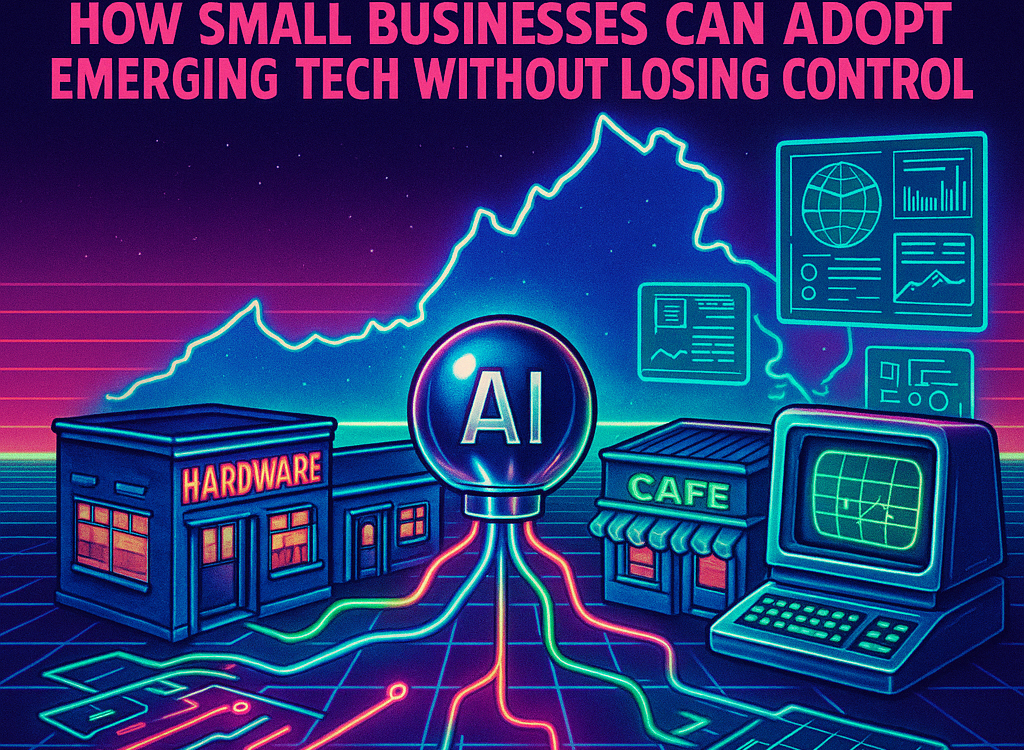
Virginia SMBs and AI: How Small Businesses Can Adopt Emerging Tech Without Losing Control
A lot of Virginia business owners are learning the same lesson at the same time. AI can save hours, improve service, and tighten operations, but it can also create new costs, new confusion, and new pressure on a team that is already busy. For Virginia SMBs and AI, the real question is not whether to use the tools. It is where to start, what to measure, and what to avoid.
That question feels even sharper in Virginia, where the tech economy keeps expanding and energy conversations now sit beside technology conversations. Data centers, utility bills, and infrastructure demands have become part of the business backdrop. Small businesses do not need to solve those issues, but they do need to understand how emerging technology can shape their own costs, staffing, and daily decisions.
Virginia SMBs and AI Start with One Problem, Not a Grand Plan
The fastest way to waste time with AI is to treat it like a strategy by itself. It is not a strategy. It is a tool, and tools work best when they solve a specific problem.
A better starting point looks simple. Pick one recurring task that eats time every week, such as drafting routine emails, summarizing meeting notes, sorting customer inquiries, or cleaning up internal documentation. If a task already has a pattern, AI can often support it without disrupting the whole business.
That narrow approach matters because small businesses do not have spare capacity for experiments that never leave the pilot stage. Owners should look for work that is repetitive, low risk, and easy to review. If the output still needs a human to check every line, that may be a good sign. It means the tool can reduce effort without replacing judgment.
The best first use case usually has three traits
It happens often, it follows a repeatable format, and a mistake would be inconvenient rather than dangerous. That is where AI can deliver value without forcing a major process overhaul.
Energy Costs and Tech Costs Now Belong in the Same Conversation
Many business owners still separate technology decisions from utility decisions. That old split no longer works. As more digital infrastructure comes online across Virginia, conversations about AI, data storage, and power use are increasingly linked to the cost of doing business.
For a small company, the practical lesson is not political. It is operational. Tech adoption can lower labor time while raising certain overhead expectations elsewhere, especially if the business adds hardware, cloud services, or always-on systems. Owners should compare total cost, not just software cost.
That means watching the full picture. A scheduling tool that saves ten hours a month may be worth it even if it adds a monthly fee. A customer support system may be useful if it reduces after-hours calls, but not if it requires a bigger tech stack than the business can maintain. The point is to measure the value of time saved against the cost of complexity.
In many Virginia businesses, the smartest financial move is to start with small wins that do not depend on heavy infrastructure. Cloud-based tools, shared workflows, and basic automation often create enough leverage without adding much physical load. That keeps the business flexible if energy prices, staffing, or demand shift.
Strong leadership Means Setting Rules Before the Tools Spread
AI adoption works best when the owner or manager sets clear guardrails early. Teams get into trouble when they use the tool differently from one another and no one agrees on standards.
Start with plain rules. Decide what the tool can draft, what it can summarize, what it must never handle alone, and who reviews the final result. If one employee uses AI for customer replies and another uses it for internal notes, both should follow the same privacy and quality expectations.
This is where leadership matters more than software selection. A good leader does not hand over judgment to a system. A good leader teaches the team how to use the system inside a process that still reflects the business’s standards.
Good guardrails answer four questions
What can the tool touch, who approves the output, where does sensitive information stay, and how do we catch errors before customers do? If those answers are fuzzy, the rollout is too loose.
The Real Gains Come from Better Hand-offs, Not Flashy Features
Small businesses often expect new technology to transform everything at once. In practice, the biggest gains usually come from smoother hand-offs between people, not from dramatic automation.
Consider a service business with incoming leads, appointment scheduling, reminders, and follow-up. AI can help draft the first response, organize the request, and flag next steps. But the real improvement comes when the hand-off between front office, operations, and billing stops breaking down.
The same principle applies in retail, professional services, logistics, and light manufacturing. If the business spends too much time searching for information, rewriting the same message, or correcting preventable mistakes, technology can help. If the bottleneck is unclear responsibility, no tool will fix that on its own.
That is why owners should map the workflow before they buy anything. Ask where the delay starts, where the work stalls, and where the same questions keep coming back. Often the answer is not a bigger system. It is a cleaner process.
Keep the Human Layer Intact
AI works best when it supports people who already understand the business. It fails when it becomes a shortcut around experience.
Customers still notice tone, timing, and judgment. Employees still need context, especially when a decision affects money, schedules, or trust. Technology should remove clutter, not erase the human part of the business.
That balance is especially important for Virginia SMBs trying to stay nimble. The businesses that will benefit most from emerging tech are not the ones that use the most tools. They are the ones that use a few tools well, watch the costs closely, and keep human review in the places that matter.
In the end, AI is less about replacing work than about revealing how work really happens. When owners see that clearly, they can trim waste, reduce friction, and make better calls without losing control of the operation. That is the advantage worth chasing.