Business
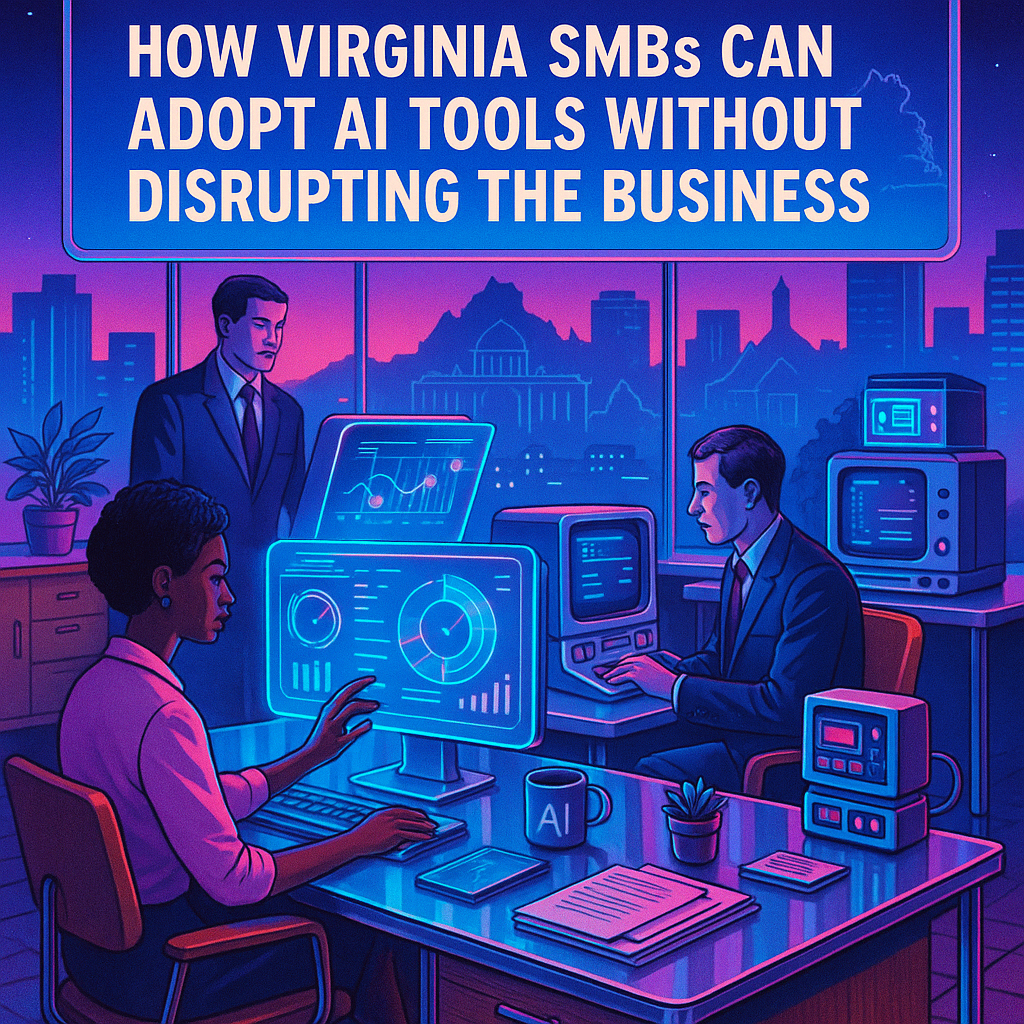
How Virginia SMBs Can Adopt AI Tools Without Disrupting the Business
A shop owner in Richmond knows the feeling. The phone rings while invoices wait, a customer wants an update, a vendor changes a delivery window, and payroll still needs attention. For many Virginia SMBs, AI tools promise relief, but the real question is simpler and harder: how do you use them without creating more confusion than they solve?
The best answer starts small. The businesses that benefit most from AI rarely chase transformation for its own sake. They pick one recurring problem, test one practical tool, and keep the human workflow in control.
Start with the task, not the technology
AI works best when it supports a routine that already exists. It can summarize notes, sort messages, draft first-pass replies, organize inventory data, or turn scattered information into something a manager can read quickly.
That matters because most SMBs do not need a grand digital overhaul. They need a cleaner way to handle the work that already consumes too much time.
The first step is to identify one process that causes repeat friction. Maybe it is customer follow-up. Maybe it is scheduling. Maybe it is the weekly scramble to pull numbers from three different systems before a team meeting.
A practical test for usefulness
Ask three questions before adopting any AI tool. Does it save time on work you repeat every week? Does it reduce errors or missed details? Can a staff member check the output before it reaches a customer or a vendor?
If the answer is no, the tool probably adds noise. If the answer is yes, the business has a real use case.
Build a small rollout that people can trust
AI adoption often fails when leaders treat it like a one-time purchase instead of a working habit. Staff do better when they see where the tool fits, what it can handle, and where human review still matters.
That is especially true in small businesses, where one bad process can affect customer trust fast. A manager who leads the rollout well does not just approve software. They set boundaries, explain the purpose, and keep the team focused on the result.
Good leadership shows up in the details here. It means choosing a narrow pilot, telling people what problem it solves, and making sure the tool helps the team rather than forcing the team to work around it.
Keep the first pilot narrow
A narrow pilot protects the business from overcommitting. Use AI in one department or for one workflow before spreading it across the operation. That gives staff time to learn without feeling like the ground is moving under them.
It also reveals the real cost of adoption. Not the price of the software, but the time needed to train people, clean up data, and define ownership.
Treat data quality as part of the job
AI cannot improve messy information on its own. If a business feeds it incomplete records, duplicate customer files, or outdated inventory notes, the output will reflect those problems.
That is why the quiet work matters. Clean data, consistent naming, and a clear approval process often produce more value than a flashy tool with a long feature list.
Virginia SMBs already understand this lesson in other parts of the business. A contractor who keeps organized job records closes estimates faster. A retailer who tracks stock carefully avoids last-minute shortages. AI simply magnifies whatever habits already exist.
What better data changes
Better data improves scheduling, forecasting, customer communication, and purchasing decisions. It can also reduce the time managers spend correcting basic mistakes.
For smaller firms, that matters because the same person often handles multiple roles. A cleaner system gives that person more time to think instead of chase problems.
Use AI to strengthen the team, not replace judgment
The strongest use of AI in a small business is not substitution. It is support. The tool can handle first drafts, surface patterns, and speed up repetitive work, while people handle context, judgment, and customer relationships.
That distinction matters in Virginia’s business environment, where many firms compete on responsiveness. Customers notice when a business answers quickly, remembers details, and solves problems without drama. AI can help with speed, but it cannot replace the judgment that builds trust over time.
This also helps with workforce planning. When a team removes a few low-value tasks from the day, it creates room for better training, more cross-skilling, and steadier service during busy periods.
Where the human edge still matters
A machine can draft a response, but a person still needs to know when the tone feels off. A system can flag a trend, but a manager still needs to decide whether that trend reflects real demand or a temporary spike.
That is the part business owners should protect. AI should give employees more time to think, not less.
The real advantage is operational clarity
The businesses that gain the most from AI usually do not talk about AI first. They talk about fewer missed emails, faster invoices, tighter schedules, and better visibility into what is happening day to day.
That is the real win. Emerging technology becomes useful when it improves the rhythm of the business. It helps a team see sooner, decide sooner, and correct sooner.
For Virginia SMBs, that is where the opportunity sits right now. Not in chasing the newest tool, but in using a few well-chosen ones to remove friction from the work that already matters.
The smartest adopters will not be the loudest. They will be the ones who start with one problem, test carefully, and keep the business human while making it more efficient.