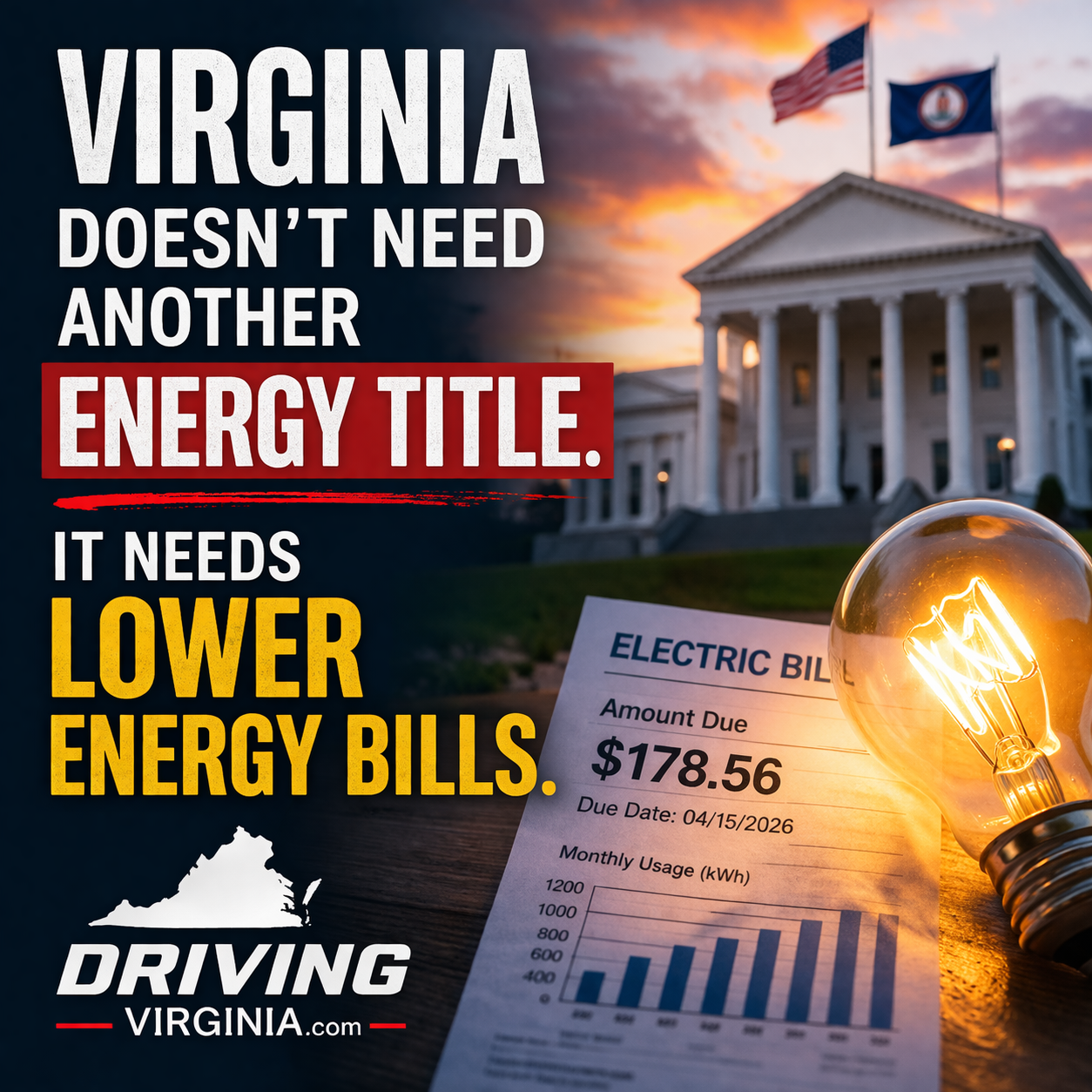
Virginia families and business owners don’t care what title sits in Richmond. They care about what shows up on the monthly power bill.
A recent opinion piece from Cardinal News makes that point directly: Virginia doesn’t need a cabinet position on energy. It needs lower energy rates. You can read the original article here:
And honestly, that argument is worth paying attention to.
The Real Energy Problem in Virginia
The issue isn’t whether state government creates another office, task force, or leadership position.
The issue is cost.
Virginia residents already feel pressure from:
- higher utility bills
- higher housing costs
- higher grocery bills
- more pressure on small business margins
When electricity costs climb, that doesn’t just hit homeowners. It hits:
- manufacturers
- contractors
- restaurants
- retailers
- family-owned businesses
- anyone trying to keep overhead under control
That matters in a state like Virginia where regional economies don’t all move at the same speed.
Northern Virginia may be booming in one way. Rural and working-class communities often feel the cost in a very different way.
Why This Debate Matters More Than It Looks
The Cardinal News piece argues that Virginia leaders keep treating energy like a messaging issue instead of a cost issue. That’s a fair criticism.
When policymakers talk about “energy leadership,” “innovation,” or “future planning,” that may sound good on paper. But if those plans lead to higher monthly bills, people notice fast.
That is especially true for:
- families on tight budgets
- seniors on fixed income
- tradesmen and small business owners
- rural Virginians with fewer alternatives
You can’t market your way around a utility bill.
The Data Center Question Virginia Has to Answer
One of the biggest issues sitting underneath this conversation is power demand.
Virginia has become a major hub for data centers, especially in the northern part of the state. That growth creates jobs and tax revenue, but it also creates massive energy demand. The question is simple:
Who pays for the infrastructure needed to support that demand?
That’s the real fight.
Because if Virginia keeps expanding its energy needs, someone has to cover:
- grid upgrades
- generation capacity
- transmission improvements
- reliability investments
And regular households should not quietly become the default funding source for everything.
That is where this issue moves from politics to pocketbook.
Titles Don’t Lower Rates
Creating leadership positions may help coordinate conversations.
It does not automatically lower energy bills.
Virginia doesn’t need more polished language around energy if families and business owners still feel like they’re getting squeezed every month.
People want answers like:
- Why are rates rising?
- What is driving the increase?
- Who benefits from the policy decisions being made?
- Who carries the cost?
Those are the questions leaders should answer clearly.
What Virginia Actually Needs
Virginia needs an energy strategy built around affordability, reliability, and fairness.
That means asking harder questions:
- Are ratepayers carrying too much of the burden?
- Are the biggest energy users paying their fair share?
- Are policy decisions being evaluated by outcomes instead of optics?
- Are rural communities getting stuck with costs tied to growth elsewhere?
That is the conversation worth having.
Because at the end of the day, most Virginians are not looking for an energy slogan.
They’re looking for relief.
Final Thought
This debate should not be about who gets the title.
It should be about who gets the bill.
And right now, too many Virginians feel like they already know the answer.
If you want to read the full opinion piece that sparked this discussion, check out the original article from Cardinal News here:
Leave a Reply