Business
A delivery van slides under a Norfolk drizzle in late March. Inventory meant for February sales sits in the back. The owner watches a day of missed customers and thinks: if only we had planned differently.
Seasonal planning for small businesses matters more than most owners assume. In Virginia, weather, tourism cycles, school calendars, and local events create predictable ebbs and flows. When you prepare for them, you smooth cash flow, keep employees productive, and avoid frantic last-minute fixes.
Map the calendar that affects your business
Start with a simple calendar that layers predictable local factors over the year. Include school schedules, major state and county events, holidays, tax deadlines, and seasonal weather risks. Keep it visible in the office and review it monthly.
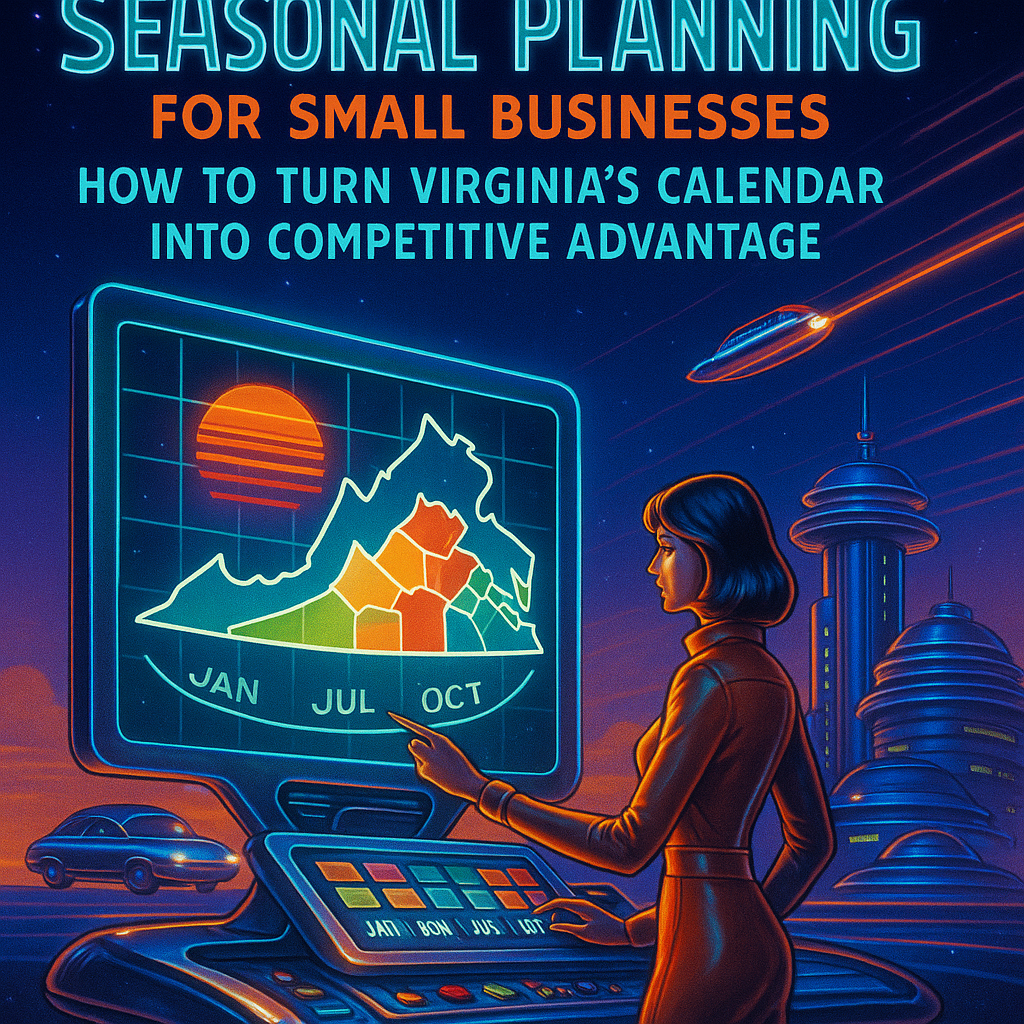
Break the year into operational windows. For many Virginia businesses those windows look like: winter maintenance and inventory cuts (Jan–Feb), spring ramp for events and construction (Mar–May), summer peak for tourism and outdoor work (Jun–Aug), fall steadying and back-to-school (Sep–Nov), and holiday prep and financial closeout (Dec).
Don’t guess demand. Use three sources: last year’s sales, local event calendars, and simple customer surveys. If you don’t have last year’s data, use a conservative estimate and track weekly to refine your plan.
Align staffing and inventory to demand, not instinct
Most owners hire or order reactively. That creates either overstaffing or stockouts. Instead, translate your calendar windows into staffing targets and reorder triggers.
Forecast staffing in layers
Forecast at three horizons. Decide who you need this week, this month, and this quarter. Use part-time or temporary contracts for narrow peaks. Cross-train staff so you can shift people between roles without losing capability.
Set inventory triggers
Move from blanket reorder points to tiered triggers. For items tied to events or weather, create a higher threshold two months out. For carry items, set a lower safety stock. Track lead times from suppliers and add a buffer for local transport disruptions.
Build a simple contingency playbook
A contingency playbook limits panic. It lists the small, repeatable steps you will take when a common disruption hits: severe weather, a supplier delay, or a sudden local event cancellation.
For weather, define three levels: advisory, moderate impact, and severe. For each level assign one person to decide on operational changes, one person to communicate to staff, and one to update customer-facing channels. Keep messages short and factual.
For supplier delays, have three fallback actions: substitute product, delay non-critical orders, or pull from alternate inventory. Test each fallback once a year so the plan works in practice.
Use short experiments to validate big changes
When you consider shifts such as changing hours for a summer market or offering new seasonal services, run short experiments. Pick a two-week window, promote the change to a small segment of customers, and measure the key metric you care about: sales per labor hour, average ticket, or conversion.
Experiments lower cost and reveal problems early. If a trial fails, you lose two weeks, not a season. If it succeeds, you scale with the data already in hand.
Build a leadership habit around the calendar
Planning stays on the shelf when leadership treats it as optional. Make a recurring 30-minute meeting each month that reviews the calendar, upcoming risks, and the three most important actions for the next 30 days.
That habit makes planning tactical and timely. It also creates accountability. Use the meeting to surface small failures and quick wins so you improve the next window.
Many owners find that a short course in management principles or a trusted reference helps anchor that habit. Reading practical material focused on team decision-making sharpens how you assign responsibility during seasonal swings. For examples of how leaders think about these processes, strengthen your approach to small, repeatable decisions around team and timing with reliable sources on effective organizational leadership.
Finance: smooth the cash curve
Seasonal revenues create cash gaps. Anticipate them by projecting cash for the next six months and updating weekly during peak times. If you see a shortfall, plan inexpensive, short-duration responses: delay nonessential purchases, negotiate temporary supplier terms, or accelerate a small receivable.
Avoid the temptation to solve every gap with long-term debt. Use short-term credit lines only for timing issues and keep a seasonal reserve equal to one month of fixed costs. That reserve changes how you negotiate and lets you avoid last-minute price concessions.
Closing insight: make seasonality a strength, not an accident
Seasonal planning for small businesses turns predictable friction into manageable work. The difference between an owner who wins and one who struggles is small decisions made early and repeated reliably.
Start by mapping your calendar, then translate windows into staffing, inventory, and contingency steps. Run short experiments. Make a monthly planning habit and protect a modest seasonal cash reserve. Those actions reduce surprises and let you use Virginia’s rhythms to your advantage.
When you treat the year as a series of planned windows instead of a rolling emergency, you free mental space to improve service, retain good staff, and turn a weather delay into only a hiccup.