Business
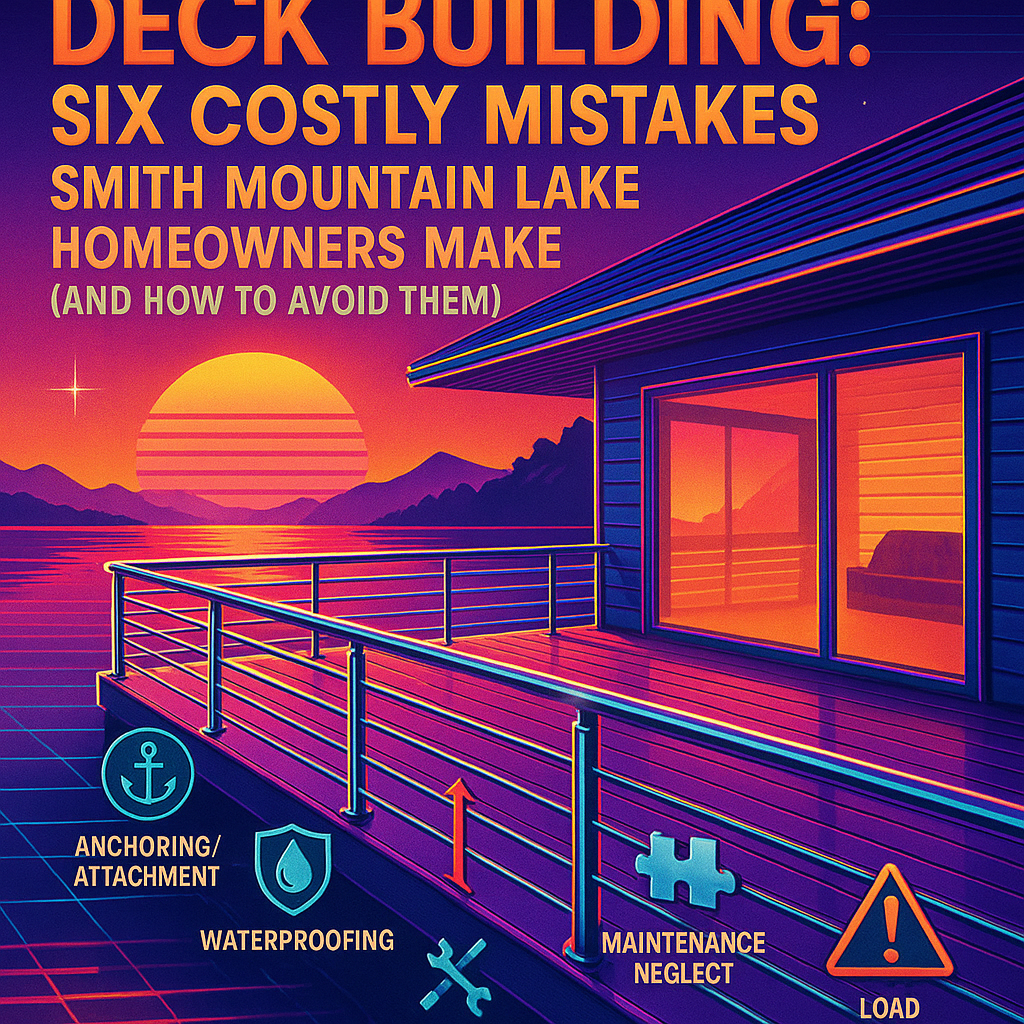
Deck Building: Six Costly Mistakes Smith Mountain Lake Homeowners Make (and How to Avoid Them)
We were standing on a lakeside lot one spring morning when the homeowner pointed at a stack of warped boards and said, “They said this would last ten years.” The deck contractor had been gone for months and the permit inspection was still open. That summer the deck shifted during a storm and the family lost use of their outdoor space for weeks.
Deck building looks straightforward until framing, drainage, and permits collide with Virginia weather and lakeside exposure. The good news is most of the worst outcomes are predictable and preventable. Read on for the six mistakes I see most often around Smith Mountain Lake, Forest, and Daleville, and the practical steps to avoid them.
1. Skipping a site-specific plan
One homeowner I worked with wanted a large waterfront deck and a fire pit. The initial plan ignored existing slopes, mature trees, and a nearby septic field. The result was costly regrading and a last-minute change to footings.
A site-specific plan does three things. It documents elevations and drainage paths. It identifies utilities and setbacks. It defines how the deck will connect to the house and soil.
Ask for a drawing that shows footing depths, beam spans, and how runoff will be handled. If your lot is steep, within 50 feet of the lake, or has a drain field, push for engineered plans. Those extra hours on paper save days and dollars in the field.
2. Underestimating water and drainage
Near a lake, you feel water is only a problem when it rains. In reality, poor drainage shortens wood life and creates rot behind siding and at ledger connections.
Simple mistakes include: putting the deck grade too close to house siding, not routing water away from footings, and failing to include ventilation under elevated decking.
Practical fixes: maintain a 1/4-inch per foot slope away from the house on the deck surface when possible. Use flashing at every ledger and inspect it after heavy storms. For ground-level decks, plan a crushed stone bed and a recess for posts to avoid standing water.
3. Choosing the wrong materials for the exposure
Composite boards can look like a low-maintenance solution, but not all products perform the same in high-sun, high-moisture conditions. The same goes for fasteners and rail systems.
Match the product to exposure and use. If your deck faces southern sun with frequent storms, select decking and hidden fasteners tested for UV and moisture. For railings at the lake edge, prioritize corrosion-resistant hardware and stainless steel where metal contacts water or treated lumber.
A rule I follow: evaluate warranties for real conditions, not showroom claims. Pay attention to fastening systems, because failure there often causes the most visible damage.
4. Improper footing and ledger connections
I have seen decks built on inadequate footings and ledgers bolted into rotted siding. In one remodel, the inspector found too-short ledger bolts and improper flashing. The ledger had to be rebuilt mid-project.
Footings must account for local frost depth and soil type. In our region, footings generally go below frost line and rest on compacted material. Ledgers require through-bolts into rim or band joists or an engineered alternative like free-standing posts when ledger attachment risks house framing.
Document footing depths, bolt sizes, and flashing details before work starts. Request inspection sign-offs at critical stages so problems are corrected before they are buried.
5. Ignoring local codes, permits, and inspections
A homeowner near a popular neighborhood assumed a small deck didn’t need a permit. Months later, the municipality issued a stop-work order and required a costly retrofit to meet guardrail heights and stair dimensions.
Local code triggers include deck height above grade, proximity to property lines, and attachment methods. Smith Mountain Lake and surrounding towns have specific shoreline and stormwater rules you must respect.
Get local permit information early. If the rules seem unclear, ask the building department for written guidance or request a site visit. Inspections are not optional. They catch structural issues and document compliance for future buyers.
6. Poor expectations around schedule and budget
I once estimated a mid-sized deck for a client in late October. The project stretched into February because of wet ground and subcontractor availability. The homeowner had not prepared for winter conditions or added contingency funds.
Seasonal realities matter in our area. Spring rains and winter freezing add time and cost. Supply chains can also push delivery of manufactured rail systems or composite boards by weeks.
Set a realistic timeline with milestones tied to inspections and deliveries. Create a budget with a 10 to 20 percent contingency. Prioritize structural and waterproofing items in the base budget and treat finishes or furniture as later phases.
A practical mid-project tip
If you reach a technical doubt—ledger attachment, footing depth, or drainage—document it with photos and ask for a written recommendation. A clear record speeds inspections and limits disputes. When you need an experienced eye, a vetted contractor or an engineer familiar with lakeside builds will spot issues most homeowners miss.
Closing insight: build for longevity, not shortcuts
The best decks I have seen last because someone invested in the details that are easy to skip. They started with a site-specific plan. They respected drainage and frost depth. They used materials and fasteners selected for lakeside exposure. They followed permits and set realistic timelines.
Think of your deck as an outdoor room with structural demands. When you prioritize engineering, drainage, and the right details, you get months of summer use and fewer surprise repairs. When you cut corners, you spend more time and money fixing problems that could have been avoided with a little planning.
If you keep one thing from this piece, let it be this: the cheapest quote that ignores site, materials, and permit requirements will cost you more in the long run. Plan the build around the site, not the other way around. Your deck will thank you for it.