Business
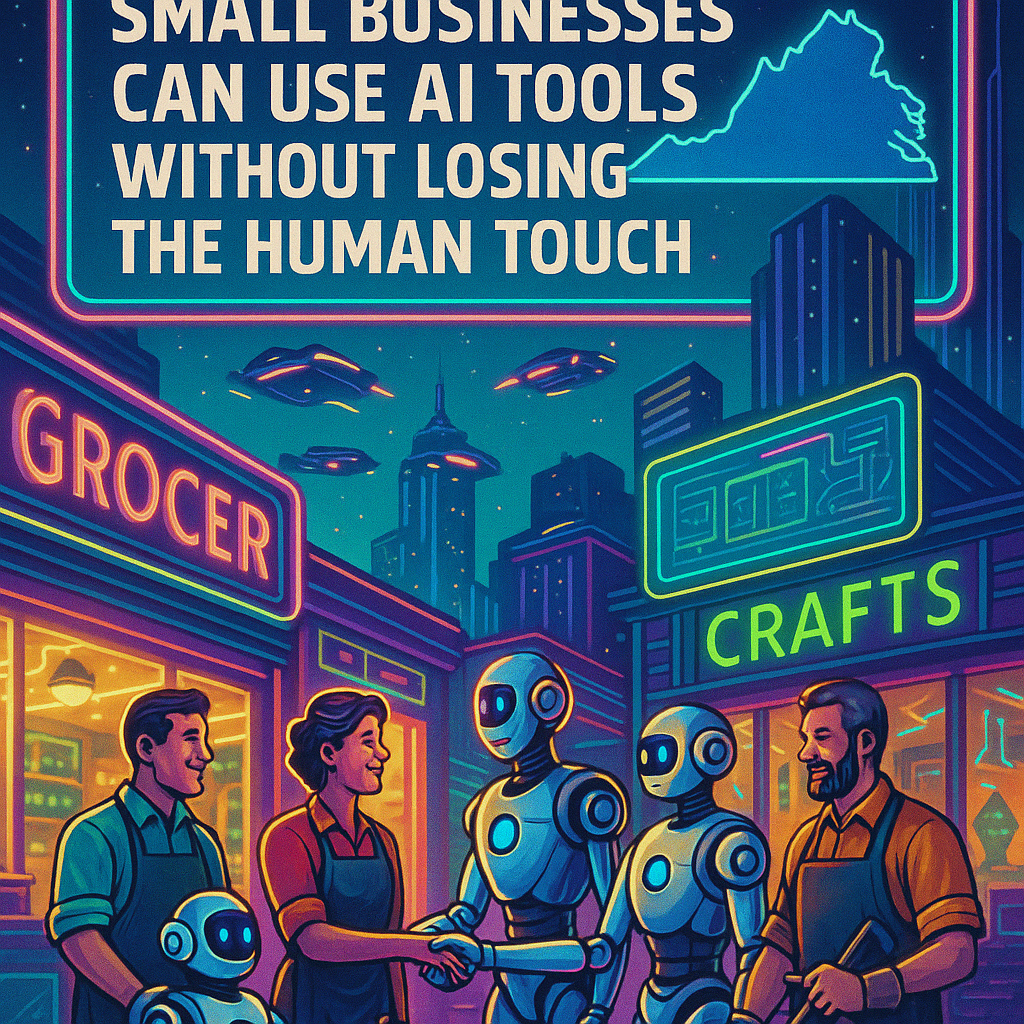
How Virginia Small Businesses Can Use AI Tools Without Losing the Human Touch
A Norfolk distributor notices orders piling up on a Friday afternoon. A Richmond contractor is buried in estimates. A Roanoke retailer keeps answering the same customer questions after closing time. This is where AI tools for small businesses stop sounding abstract and start looking useful.
For many owners, the question is not whether emerging technology matters. It is how to use it without adding confusion, cost, or another system that nobody on the team wants to touch. The best answer is usually smaller than people expect. Start with one task, one team, and one problem that already eats time.
AI Tools for Small Businesses Work Best When They Solve One Repeated Problem
The wrong way to adopt AI is to chase a trend. The right way is to look for work that repeats every day, follows a pattern, and does not require much judgment until the end.
That might mean drafting customer replies, summarizing meeting notes, sorting leads, or turning a pile of handwritten notes into a clean checklist. In a small business, those tasks often happen around the edges of the workday. They do not look dramatic, but they drain focus.
A good test is simple. If an employee says, “I answer this same question ten times a week,” AI may help. If the work depends on local knowledge, trust, or a delicate conversation, AI should stay in the background and support the person, not replace them.
Start with the process, not the software
Before anyone opens a new tool, map the process on paper. Where does the work begin? Who touches it? What gets delayed? What creates rework?
That short exercise usually reveals the bottleneck. Once you see the bottleneck, you can decide whether AI can draft, summarize, classify, or predict part of the work. If the answer is no, that is useful too. It keeps the business from buying complexity it does not need.
Virginia Businesses Are Feeling the Energy and Infrastructure Side of AI Too
AI does not live only in an app on a laptop. It depends on data centers, networks, and power. That matters in Virginia more than most places because the state already sits at the center of national data center growth, and that growth now shapes local energy conversations as much as it shapes technology strategy. citeturn0search0turn0search1
For small businesses, the lesson is practical. AI adoption sits inside a larger infrastructure story. If your operation depends on cloud services, online ordering, digital payments, logistics software, or remote staff, then power reliability and digital resilience affect daily work. The technology can make a business faster, but only if the business plans for interruptions and keeps its own systems lean.
The energy side also pushes owners to think differently about cost. More computing activity can mean more strain on the grid and more attention to efficiency. In other words, the smartest technology choices are not always the biggest ones. Sometimes the best move is the one that reduces waste in both time and energy.
The hidden cost is usually time, not licensing
Owners often focus on subscription fees and ignore the real cost, which is training, cleanup, and habit change. If a tool saves ten minutes but creates thirty minutes of checking, the business loses.
That is why the first rollout should be narrow. Pick one use case, define what “better” means, and measure whether staff actually finish faster or simply finish differently. If the tool does not remove work, it just moves it.
Strong leadership Makes AI Less Threatening and More Useful
The toughest part of adopting AI is rarely the software. It is the human reaction. People worry about mistakes, job loss, and looking foolish in front of a machine that seems smarter than it is. Good leadership lowers that tension by naming the purpose clearly.
That means saying what AI will do, what it will not do, and where a person still has final judgment. It also means admitting that early results may be messy. Teams trust change more when they see an owner treat it like a process, not a magic trick.
In a small business, the owner often sets the tone. If the owner treats AI as a shortcut for avoiding people, the team will resist it. If the owner treats it as a tool for freeing staff from repetitive work, the team will test it honestly.
Use AI where speed matters most
The best early wins usually live in back-office work and customer support. AI can help draft first responses, summarize calls, organize documents, or surface patterns in data that a busy owner would miss.
It can also support workforce planning. A shop with seasonal swings can use simple forecasting to staff more accurately. A service business can review demand patterns and plan routes, shifts, or appointment blocks with less guesswork. None of that replaces experience. It just gives experience a cleaner view of what is happening.
Real-World Guardrails Keep Small Businesses from Making Expensive Mistakes
AI creates value only when someone checks the output. That is not a flaw. It is how the tool works.
Every business should set a few guardrails before expanding use. Keep sensitive customer data out of public prompts. Review anything that affects pricing, legal terms, payroll, or safety. And make one person responsible for spotting when the tool drifts off course.
That discipline matters because small errors scale quickly. A wrong customer message can damage trust. A bad estimate can hurt margins. A sloppy summary can send a manager down the wrong path for a week.
The best operators treat AI like a junior assistant with unusual speed. It can draft, sort, and summarize. It cannot own the consequences.
Measure what changes, not what sounds impressive
A useful AI project should improve one of three things: time, accuracy, or consistency. If none of those move, the business has not adopted a tool. It has added noise.
That is why owners should track simple before-and-after numbers. How long did the task take last month? How many errors slipped through? How many interruptions did employees avoid? Those answers tell the real story.
The Smallest Useful Step Is Often the Smartest One
Virginia business owners do not need to turn every process into a technology project. They need to find the parts of the business that cost too much attention and not enough judgment. That is where AI earns its keep.
The real advantage of emerging technology is not that it makes a company look modern. It is that it gives people back time to do the work only humans can do well. The businesses that will benefit most are not the ones that adopt the most tools. They are the ones that use technology with restraint, clarity, and a hard eye on what actually improves the day.
Start there, and AI becomes less of a disruption and more of a practical edge.