Business
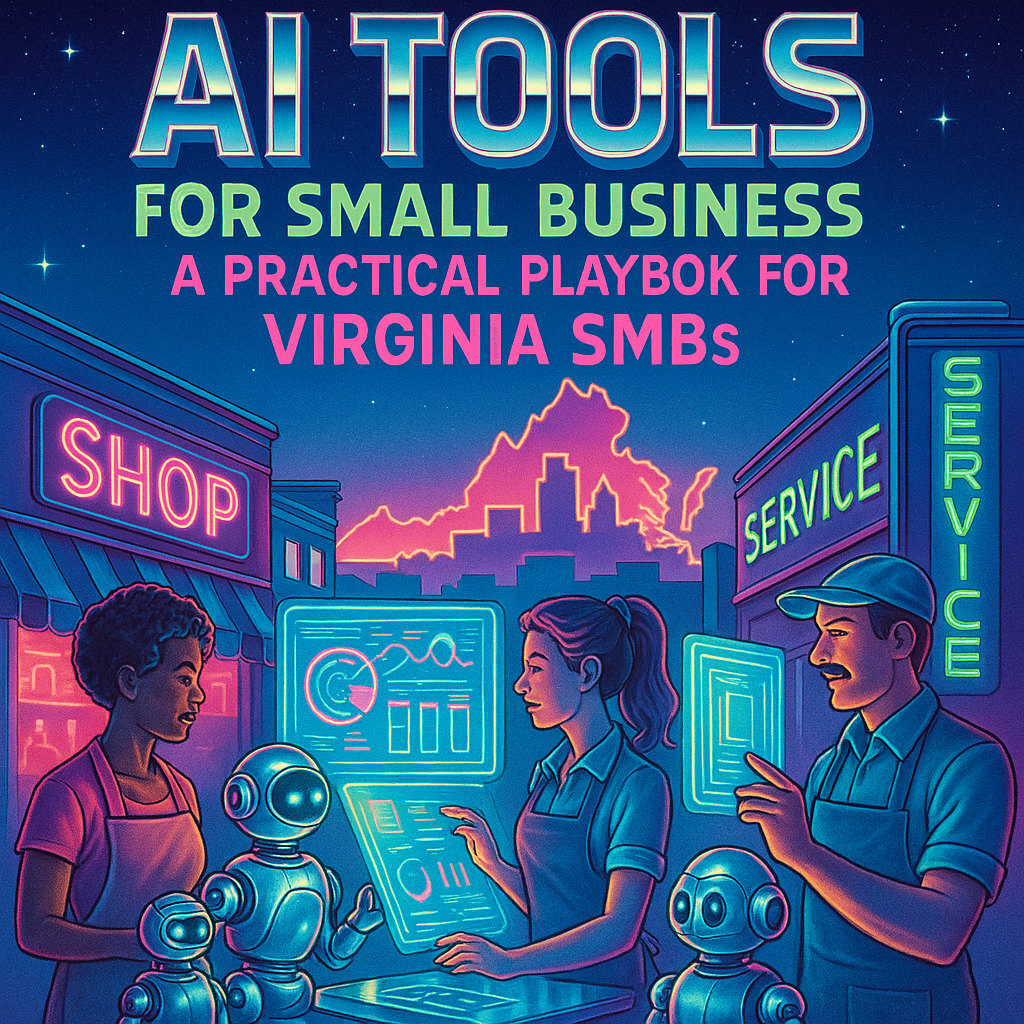
AI Tools for Small Business: What Virginia Owners Learn First
A shop owner in Virginia does not need a lab or a large tech budget to feel the pressure of change. Orders still need to ship, invoices still need to get paid, and customers still expect quick answers, even when the team is already stretched thin. That is where AI tools for small business start to matter, not as a headline, but as a way to buy back time.
The smartest early adopters rarely begin with a grand plan. They start with one annoying task that repeats every week. If a tool can reduce that drag without creating new confusion, it earns its place.
AI Tools for Small Business Work Best on Repetitive Problems
Most small businesses waste time in the same few places. Someone rewrites the same email five different ways. Someone sorts customer requests by hand. Someone tries to build a schedule from a spreadsheet and a text thread.
AI works best when the task is repetitive, text heavy, and easy to review. It does not need to replace judgment. It needs to remove the first draft, the first pass, or the first round of sorting.
That means the best starting points are usually internal, not customer facing. Think meeting notes, inbox triage, draft replies, basic summaries, job descriptions, and rough forecasting. These are the places where a few saved minutes can add up to real capacity over a month.
The mistake many owners make is trying to automate the hard part first. They want AI to make the decision before it has handled the data. In practice, it works better as a helper that prepares the work for a person who still knows the business.
The Fastest Gains Come From Clear Rules and Smaller Tests
A useful AI rollout starts with a narrow question. What task takes too long, happens often, and does not require deep creativity every time? That question usually exposes the first good use case.
Start with one workflow, not five
If a team tries to change too much at once, the tool becomes another layer of friction. One workflow gives people a chance to learn what it does well and where it falls short. That makes adoption easier and reduces the risk of wasting time on a feature nobody uses.
Define what the tool can touch
Good results depend on clear boundaries. The team should know which documents, emails, or records the tool can use, and which ones stay off limits. That matters for privacy, accuracy, and trust. It also keeps the business from treating a draft as if it were a final answer.
Keep a human in the loop
AI can draft, sort, and summarize. It should not quietly make decisions that affect payroll, pricing, hiring, or customer commitments. A person still needs to check the output and own the final call. That is not a limitation. It is the reason the tool remains useful.
Owners who want stronger judgment on this point often benefit from a practical view of leadership because the real challenge is not the software. It is deciding how people and process should change around it.
Where Virginia SMBs See the Most Practical Value
Virginia SMBs operate in a market that rewards speed, local trust, and tight margins. That makes AI especially relevant in areas where owners cannot afford constant back-office sprawl.
Customer communication is one of the first places to improve. A business can use AI to draft responses, translate a message into clearer language, or summarize a long thread before a staff member steps in. That reduces the time between a customer question and a useful reply.
Scheduling is another strong use case. Service businesses often lose hours to the back and forth of matching staff availability with demand. AI can help organize options faster, even if a manager still makes the final decision.
Inventory and purchasing also benefit, especially when demand shifts with seasonality or local events. A tool that spots patterns in past orders can help owners avoid obvious overbuying or stockouts. It will not predict the future perfectly, but it can surface trends faster than a spreadsheet review.
Back-office admin may be the most underrated win of all. Many small businesses lose momentum because paperwork eats the energy needed for sales, service, and hiring. When AI handles summaries, templates, and routine sorting, the team gets more time for work that actually grows the business.
The Real Risk Is Not the Tool, It Is Drift
The biggest mistake is not using AI badly once. It is letting it spread without a standard.
If every employee uses a different prompt, a different source, or a different tone, the business ends up with inconsistent output and more cleanup than before. That creates the false impression that AI does not work. Often, the problem is that nobody defined how to use it.
Owners should watch for three kinds of drift. First, output drift, when the tool starts producing inconsistent answers. Second, process drift, when staff use it in ways that no one has reviewed. Third, trust drift, when employees or customers stop knowing whether a message came from a person or a machine.
That is why the best AI programs stay simple at first. They use a few documented tasks, a few clear examples, and a few checks. They do not chase novelty. They build habits.
The Businesses That Benefit Most Stay Close to the Work
AI tools for small business do not reward the loudest adopter. They reward the owner who notices where time disappears and who is willing to improve one process at a time.
That often means starting with the work that nobody celebrates. Drafting, sorting, summarizing, scheduling, and follow-up rarely make headlines. But they shape how fast a business moves and how much attention the team has left for customers.
For Virginia SMBs, the lesson is simple. Use AI where it can reduce friction, not where it can create theater. Keep the scope narrow, keep the human accountable, and keep the business focused on the work that only people can do well. The advantage comes not from using more technology, but from using it with better judgment.