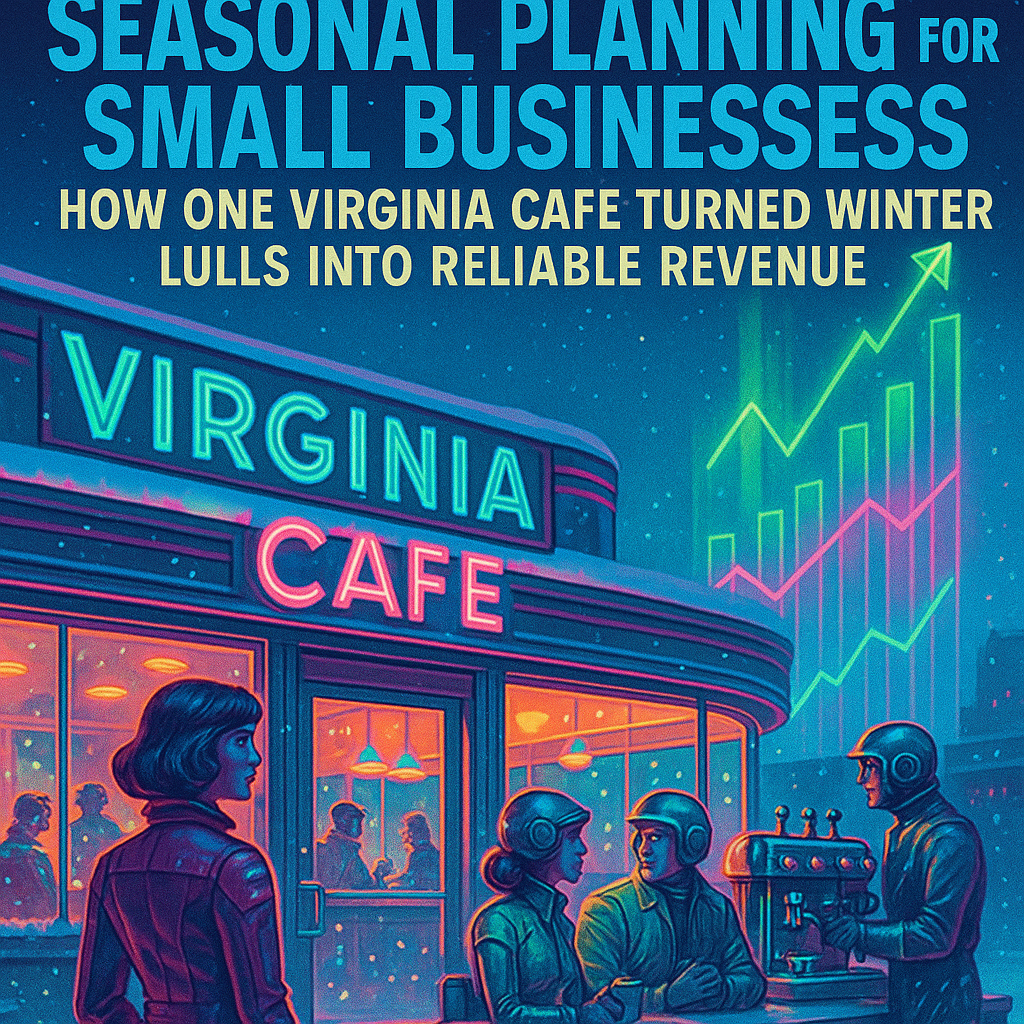
Seasonal Planning for Small Businesses: How One Virginia Cafe Turned Winter Lulls into Reliable Revenue
On a January morning in Staunton, the owner of a two-location cafe watched the dining room shrink from busy to quiet in a single week. Payroll still needed to be covered. Suppliers kept calling about minimum orders. The landlord wanted rent on the first.
Seasonal planning for small businesses is not a spreadsheet exercise. It is the difference between scrambling each slow season and running predictable operations year-round. This article breaks down practical, operator-tested steps to turn predictable seasonality into a planning advantage.
Recognize the exact pattern and cost of your seasonality
Too many owners say “it slows down in winter” and stop there. You need numbers and dates. Look back two to three years of weekly revenue, payroll hours, and variable costs. Mark the precise weeks when revenue dips and how deep the dip goes.
Then map fixed costs to those dates. Rent, basic utilities, insurance, and loan payments rarely change by season. Knowing exactly which weeks create a cash shortfall gives you a target for planning rather than a vague feeling of trouble.
Hunting for patterns will also reveal new opportunities. Maybe weekday lunches fall off but catering requests pick up in late fall. Maybe a product sells poorly in summer but strong in early spring. The data guides decisions that protect margins.
Plan staffing and inventory to match real demand
When demand drops, labor and inventory are usually the biggest controllable drains. Treat staffing as a dynamic budget line, not a constant.
Start by creating a demand-to-labor matrix. For each week of the year, record the average sales per labor hour. Use that to set target labor hours and a minimum roster you will not drop below. Communicate this schedule rhythm with your team months ahead so they can plan second jobs or time off.
Inventory should follow a similar cadence. Negotiate flexible ordering with suppliers so you can reduce minimums in slow weeks. If a supplier won’t budge, consider consolidating orders across locations or partnering with another local business to share bulk buys during peak seasons.
Build predictable alternate revenue streams
Most small businesses survive seasonality by finding income that counterbalances slow periods. This cafe added three: packaged coffee subscriptions, weekday office lunches, and weekend private tastings.
Start with what you already do reliably. Package a best-selling item or a service into something that sells regardless of foot traffic. A subscription can smooth cash flow by collecting payments up front. Office lunch programs bring steady weekday volume during slower months.
Small experiments matter. Pilot a subscription with loyal customers for three months, track retention and fulfillment cost, and then scale only if the margin holds. Each new revenue stream should reduce the depth of your slow season, not add complexity you cannot sustain.
Cash flow rules that keep you solvent
Cash flow planning beats optimism. Convert your revenue map into a weekly cash forecast that lists expected inflows and outflows. Pay attention to payment timing. If customers pay net-30, you cannot treat that money as immediate working capital.
Create a seasonal cash reserve by allocating a fixed percentage of peak-season profits into a dedicated account. Treat reserves as non-operating funds until a defined threshold triggers release. That discipline avoids emergency borrowing at high cost.
When reserves are not yet possible, short-term lines of credit can help but handle them conservatively. Use credit for timing gaps, not for recurring structural deficits. If you rely on credit every slow season, you must redesign your business model.
Convert your leadership and scheduling into a competitive advantage
Clear expectations from the top calm employees and reduce turnover during hard months. The cafe’s owner held a short monthly meeting each season to explain forecasts, highlight what would change in scheduling, and invite staff ideas for new revenue or efficiency. That simple routine reduced last-minute callouts and generated two reliable weekday offerings suggested by frontline employees.
Leadership matters in execution. When teams understand why hours shrink or why a new subscription exists, they implement changes more smoothly. If you want frameworks or models to structure those conversations, investing time in accessible resources on leadership can pay long-term dividends.
Scheduling clarity helps retention
Publish schedules at least three weeks in advance when possible. Shortened notice increases churn. Offer predictable block hours so part-time employees can plan second jobs. Predictability costs less than the disruption of surprise hires.
Empower staff to own small experiments
Let a trusted employee run a trial pop-up or a new product for four weeks with defined metrics. Limited authority motivates staff and surfaces ideas managers cannot see from the office.
Close the season with a review and a simple playbook
After each slow season, hold a compact review. Compare forecasted versus actual cash and labor. Note what you changed and whether it worked. Distill two or three repeatable moves into a short playbook: pricing adjustments, minimum staffing levels, supplier flexibility, and a tested alternate revenue offering.
A one-page playbook keeps knowledge in the business and makes the next slow season easier. It also reduces founder burnout. When you can look at a short list of actions that have worked before, you spend less time improvising and more time refining.
Closing insight
Seasonality is not an unavoidable punishment. It is a predictable variable you can measure, manage, and partially neutralize. Small and medium businesses that treat seasonality as an operational challenge create margins of safety without adding unnecessary risk.
Set precise dates and numbers, match labor and inventory to real demand, test alternate revenue streams, protect cash with a reserve or conservative credit, and make predictable communication part of your routine. Do those things and the quiet weeks stop feeling like threats. They become times to prepare, experiment, and strengthen the business for the next busy season.
Leave a Reply